

Flamingo — Increasing AOV and Conversion Through Routine-Based Product Discovery
The Flamingo PDP is the primary conversion surface for the brand, but it lacked a structured way to surface complementary products. As a result, users purchasing a single item had limited guidance toward building a complete routine, creating missed opportunities for product discovery and average order value growth.
The objective was to introduce a scalable, system-driven cross-sell mechanism within the PDP that would guide users from single-item purchases into full routines.
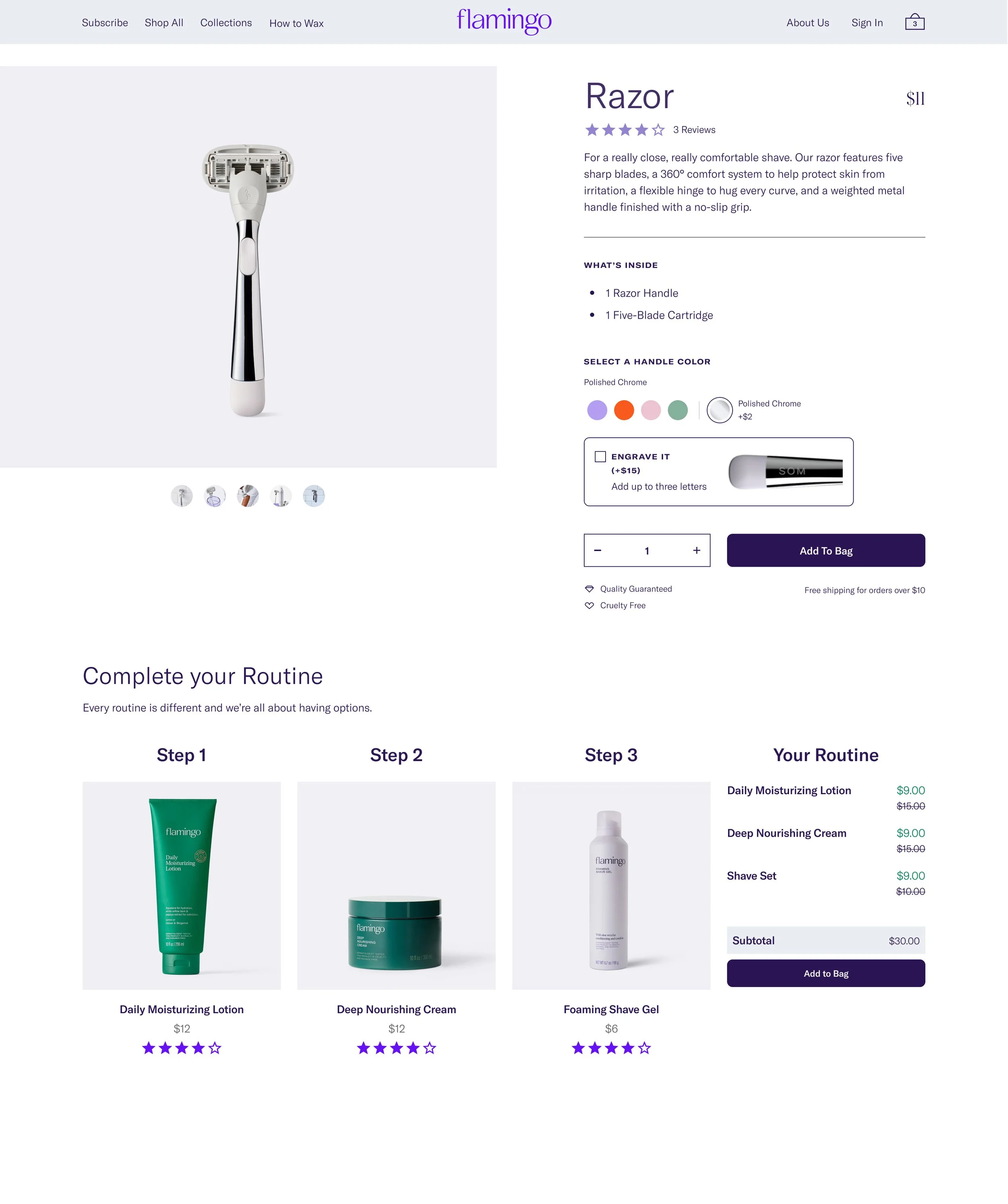
I designed and delivered the “Complete Your Routine” module, a Forge-powered component that surfaces complementary products directly within the purchase flow while enabling reusable merchandising patterns across the catalog.
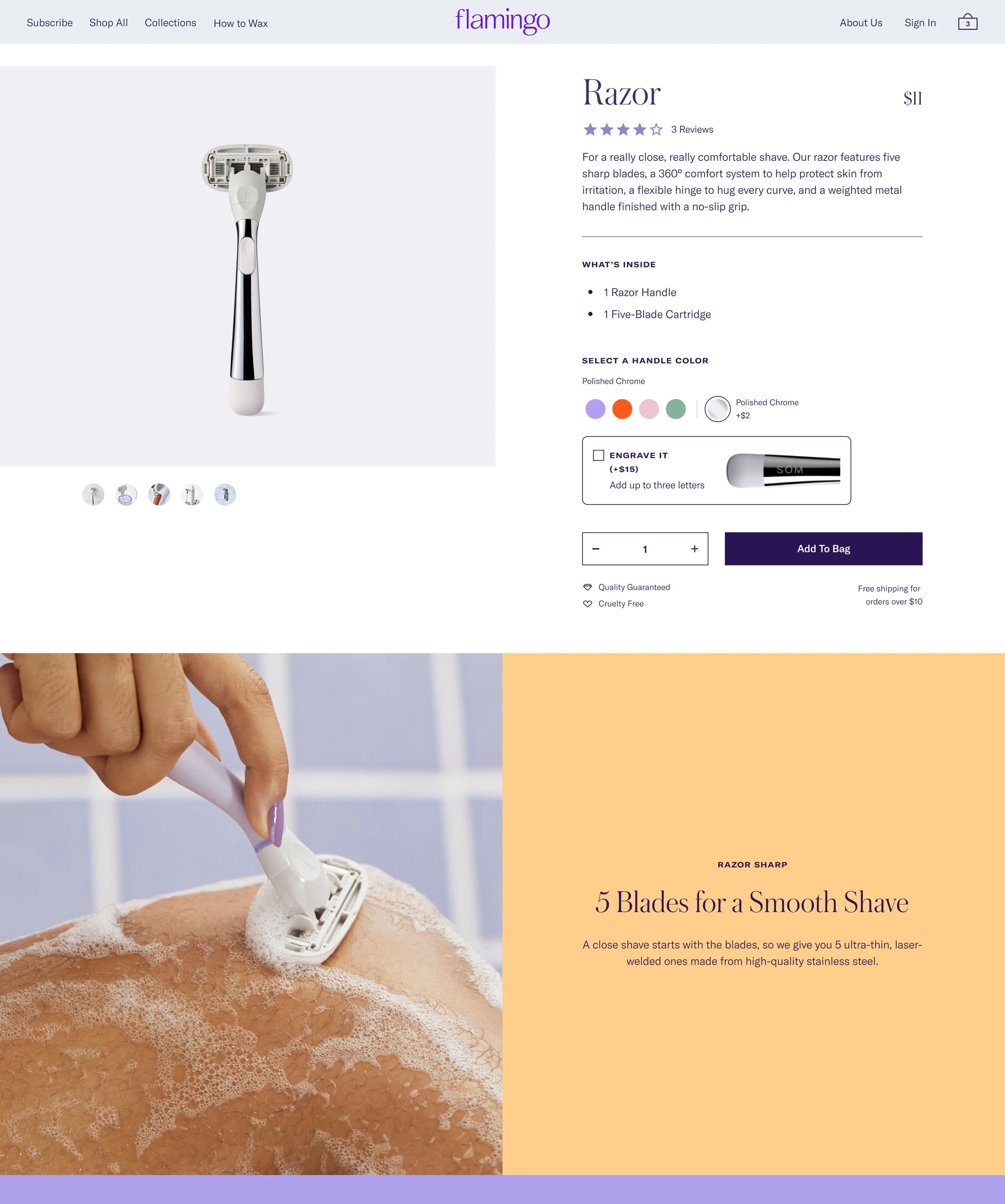
Audit & Gap Identification
Through a structured UX and merchandising audit of the Flamingo PDP, I identified several opportunities impacting both product discovery and revenue potential:
No scalable cross-sell mechanism
Complementary products were not surfaced in a structured way, limiting opportunities to increase basket size.
Weak routine discovery
Users purchasing a single item had little guidance toward building a complete care routine.
Fragmented merchandising patterns
Cross-sell opportunities were inconsistent and not reusable across PDPs.
Limited product education
Supporting products that naturally fit the routine were not clearly contextualized within the purchase journey.
Missed AOV opportunities
Without contextual recommendations, users often completed checkout with a single product.
No systemized merchandising component
Cross-sell patterns required manual implementation and were difficult to scale across the catalog.
These insights informed the design of a modular cross-sell component built through Forge, enabling scalable merchandising while helping users discover complementary products within their routine.
I hypothesized that introducing a modular cross-sell component within the Flamingo PDP, powered by Forge, would help users discover complementary products as part of their routine and increase Average Order Value (AOV) while maintaining a simple purchase flow.
System Integration: Built with Forge Components
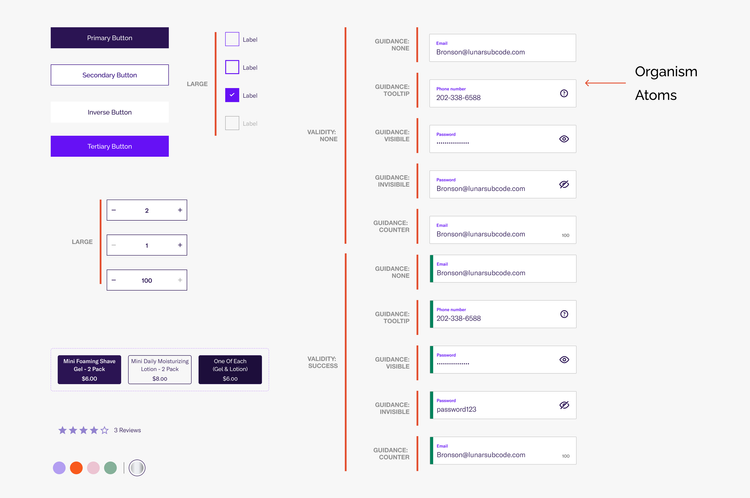
Early in my time at Harry’s, our UI was loosely based on atomic design principles, but components were inconsistent and hard to scale. Forge formalized this into a true design system shared by Design and Engineering.
Translate atomic thinking into practical, reusable components
Align design tokens and patterns with frontend implementation
Ensure new surfaces (like the Homepage) were built using Forge first
Reduce refactors by designing with system constraints in mind
Our internal design system powered this project from atoms to templates enabling consistency, speed, and zero dev refactors.
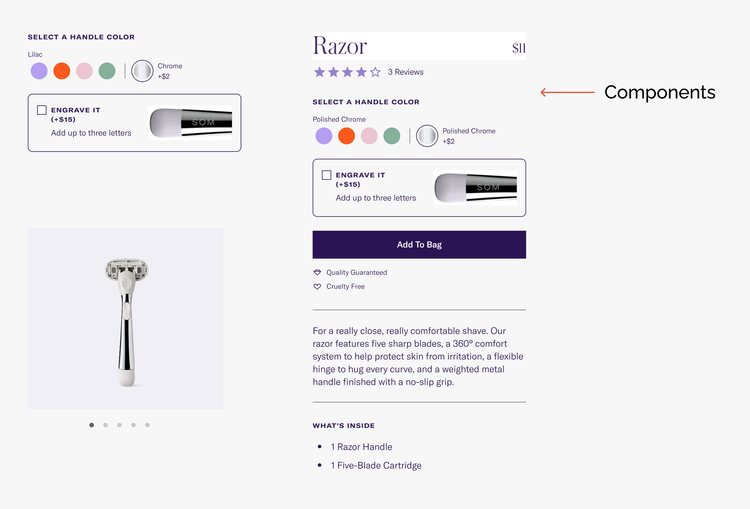
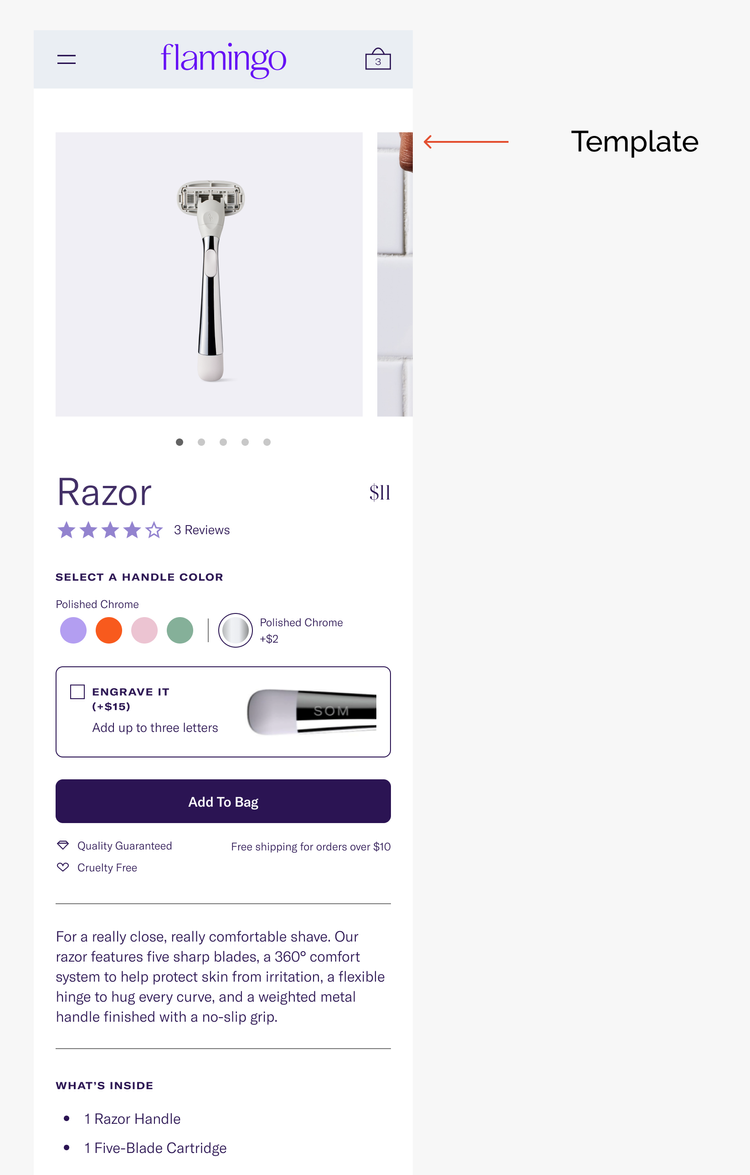
Strategic Modularization
Initial directions explored routine education and upsell entry points using pre-FORGE design.
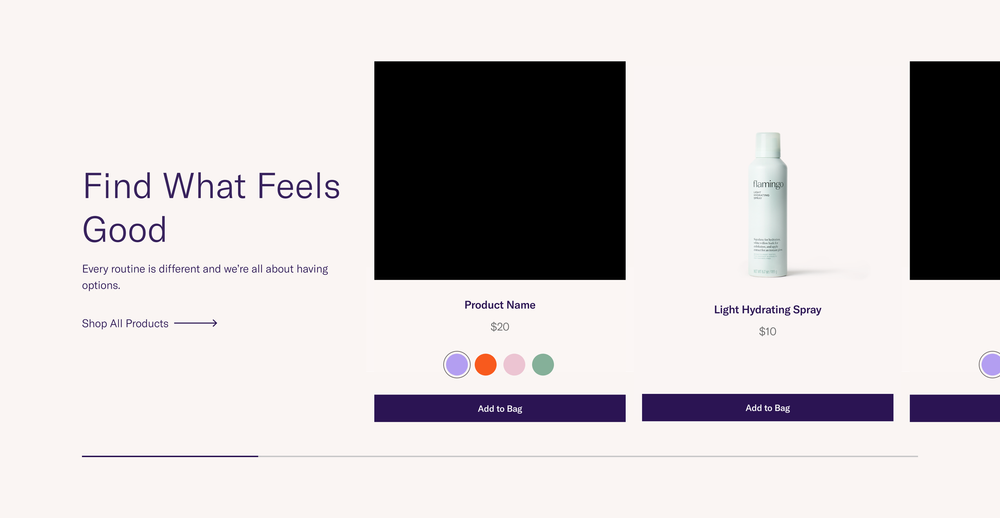
Leveraged UX insights to define a modular, reusable solution using the Forge system.
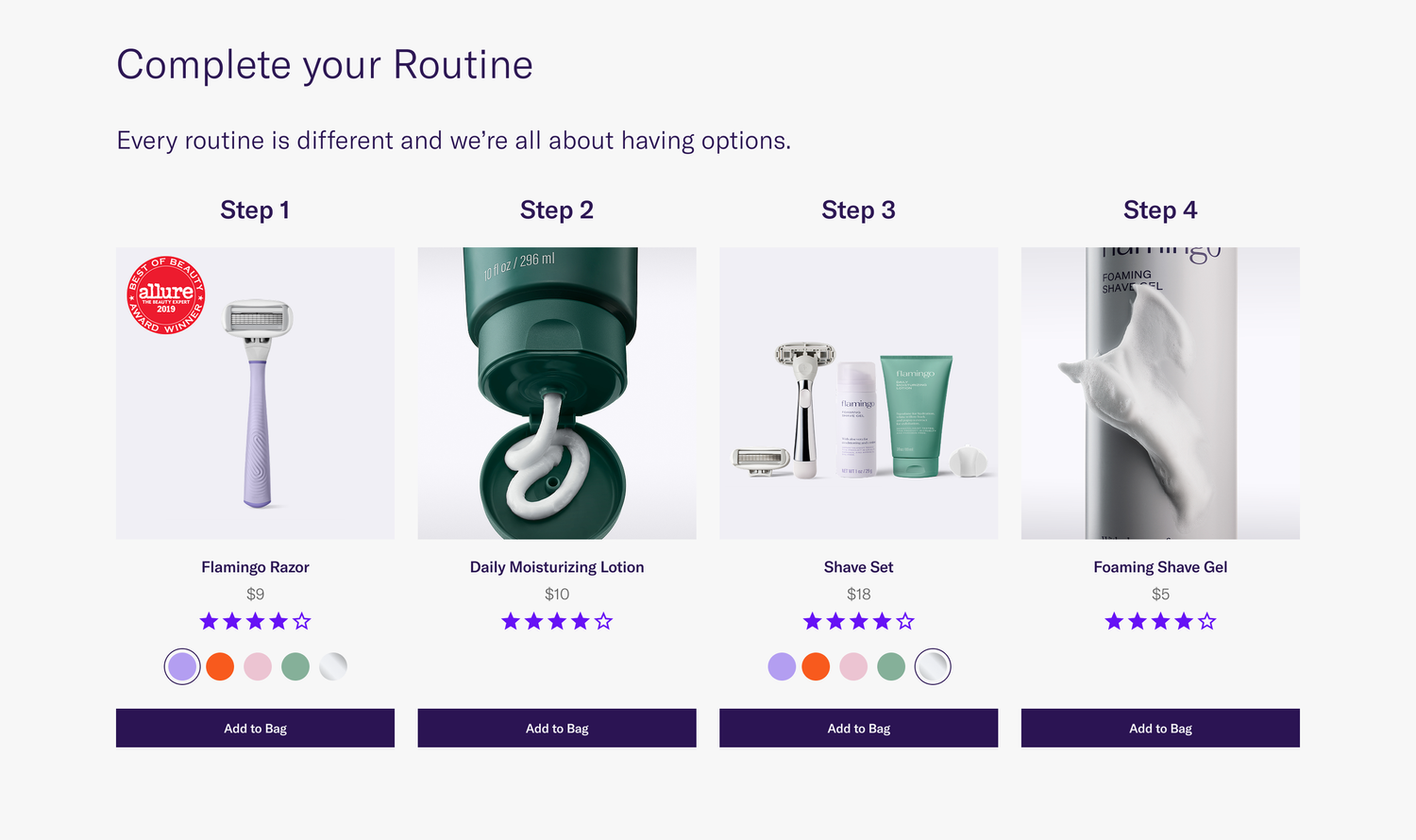
Moved from a static, non-scalable upsell to a dynamic, logic-driven component that allowed for easier category swapping and bundle logic.
I partnered with Product and Growth to validate the new cross-sell experience, measuring:
The component was delivered entirely through Forge, enabling consistent deployment across PDPs with minimal engineering overhead and a reusable merchandising pattern.
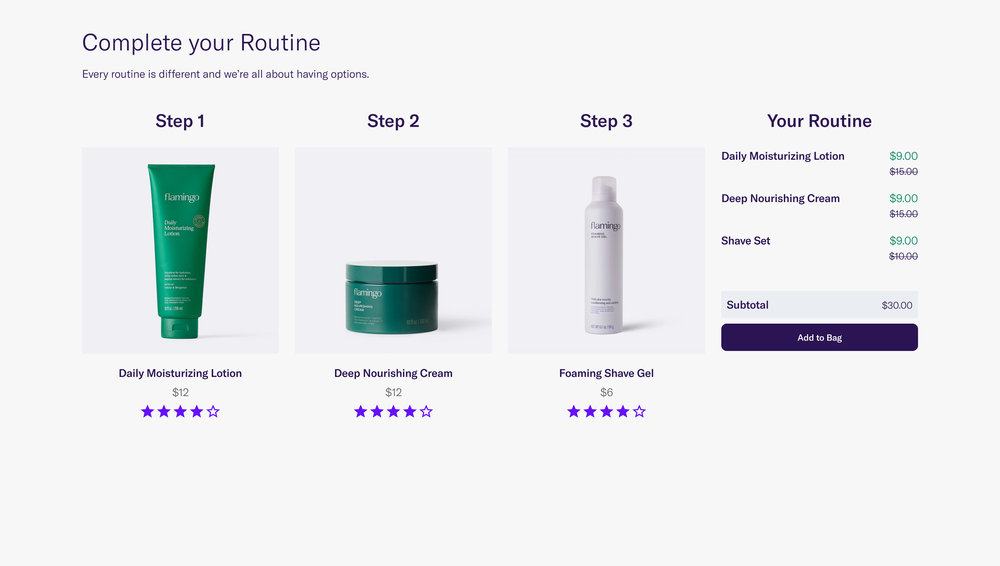
Modular Component Architecture
The "Complete Your Routine" module was engineered to be a flexible, data-driven component. By leveraging the Forge Design System, we ensured that merchandising logic could be applied consistently across diverse product categories without requiring custom engineering for every PDP.
This approach reduced time-to-market for new experiments and allowed for rapid category-swapping based on real-time performance data.

Results & Impact
The Routine Builder results were enabled by a systemic approach to merchandising using Forge. By leveraging pre-approved components, we ensured visual consistency and future reusability across the catalog, allowing for rapid implementation without compromising brand or engineering standards.
Team & Role
I led the full UX design, system-alignment, and cross-functional coordination, delivering a scalable cross-sell module that fit both user needs and business goals.
This project reinforced that small, well-placed UX interventions can produce significant business outcomes, especially on high-traffic surfaces like PDPs.
By combining design systems, data-informed iteration, and cross-functional collaboration, we delivered a high-impact, low-lift solution and proved the value of reuse over reinvention.