


Forge: Rebuilding a Scalable Commerce Design System
Establishing a unified architectural vision to support a critical platform transition.
The brand was migrating commerce infrastructure to Shopify while simultaneously preparing for a major visual redesign. The migration required a system capable of handling multi-brand complexity without accumulating technical debt.
The Intervention
Midway through the migration, the external agency hit a technical ceiling. I escalated the platform risk and led the rebuild of Forge in 14 days, stabilizing the foundation and enabling the migration to proceed without delaying the launch.
Forge served as the shared UI foundation powering commerce experiences across multiple brands. Click to enlarge.
Reframing the platform as a system of composable product surfaces.
Rebuilding individual screens would not solve the underlying problem; the platform required a system capable of supporting continuous development, experimentation, and cross-team collaboration.
 CLR_P
CLR_P
 CLR_H
CLR_H
 NEU_B
NEU_B
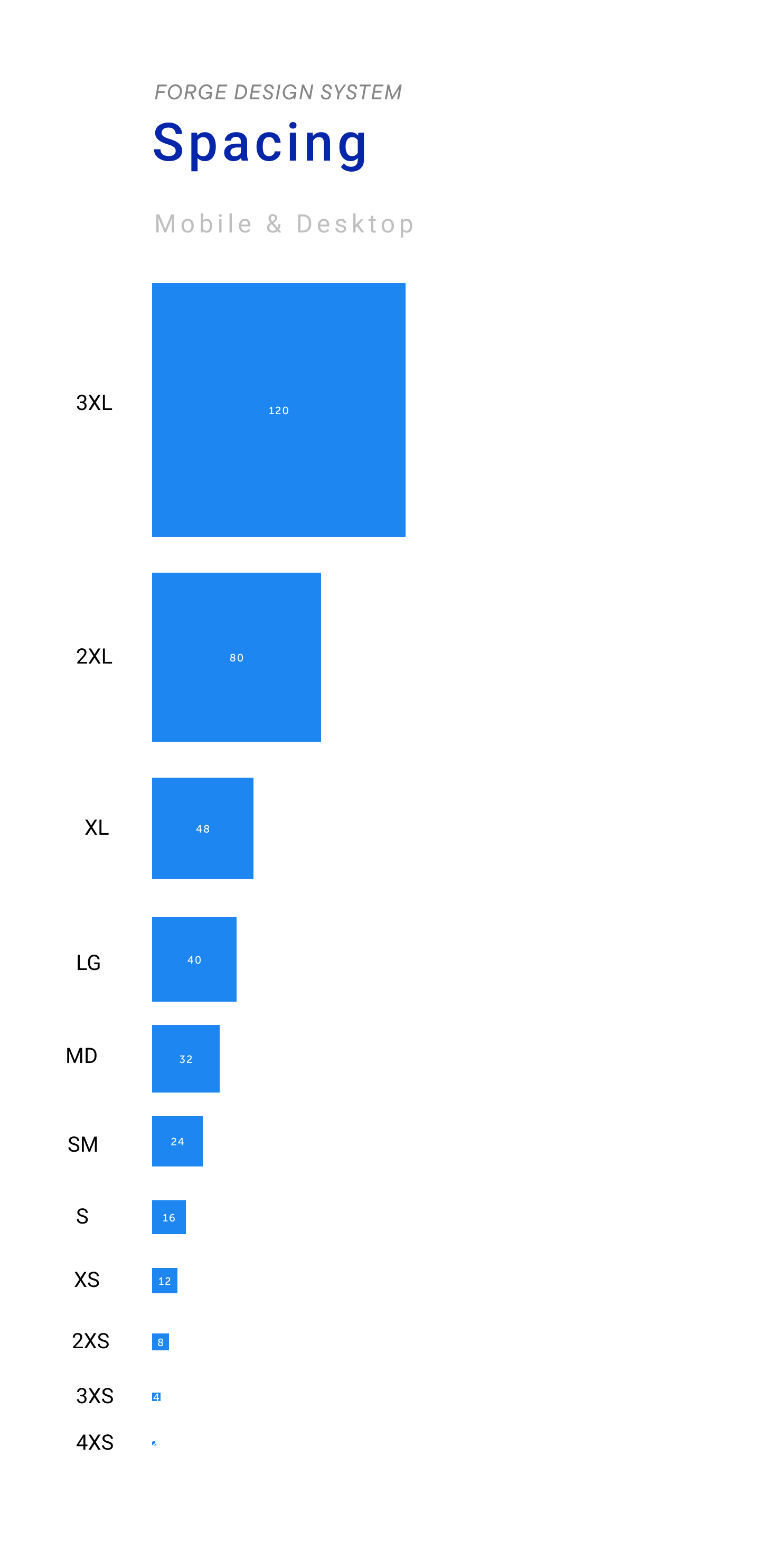 SPC_8
SPC_8
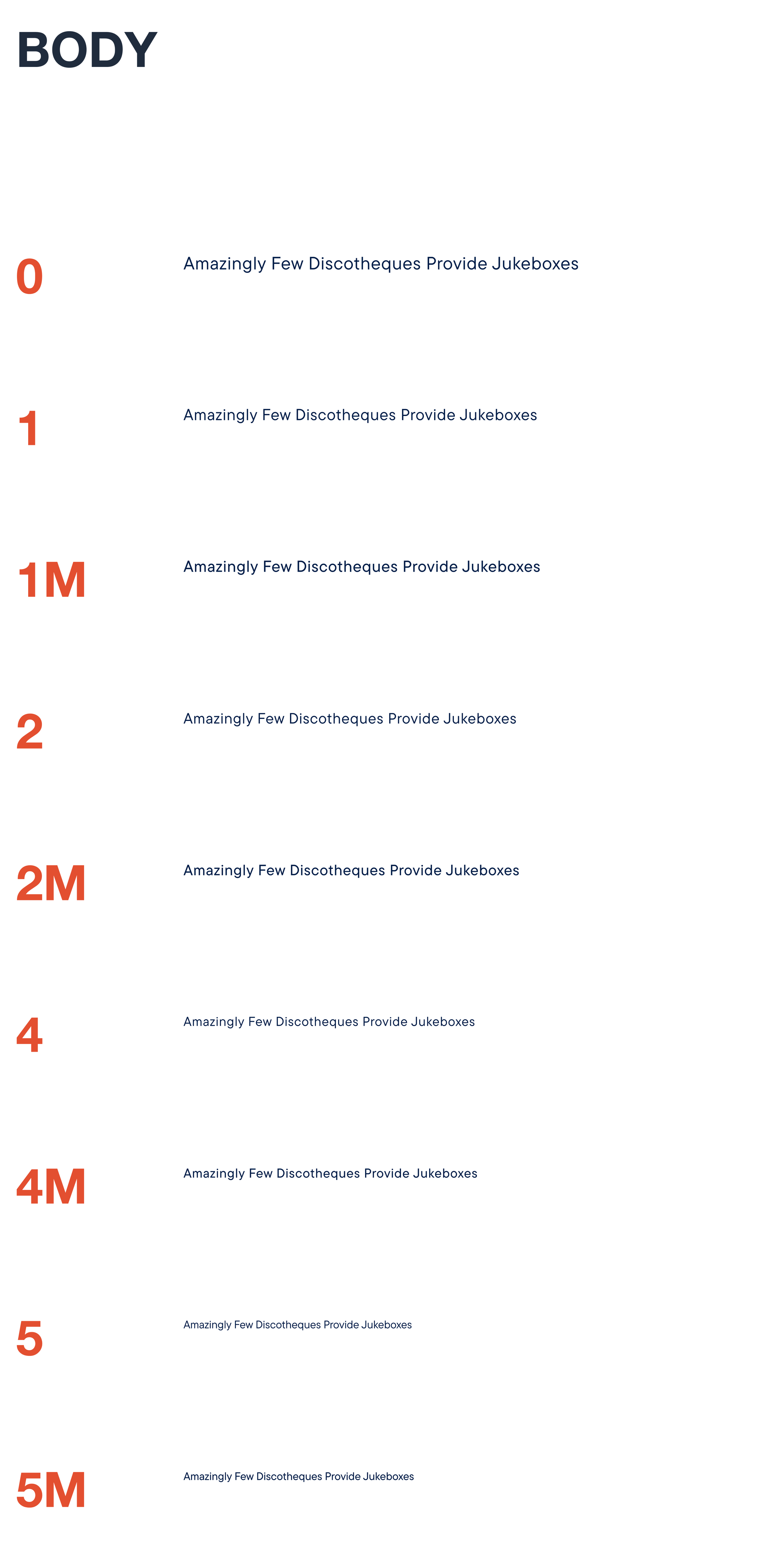 TYP_B
TYP_B
 RAD_C
RAD_C
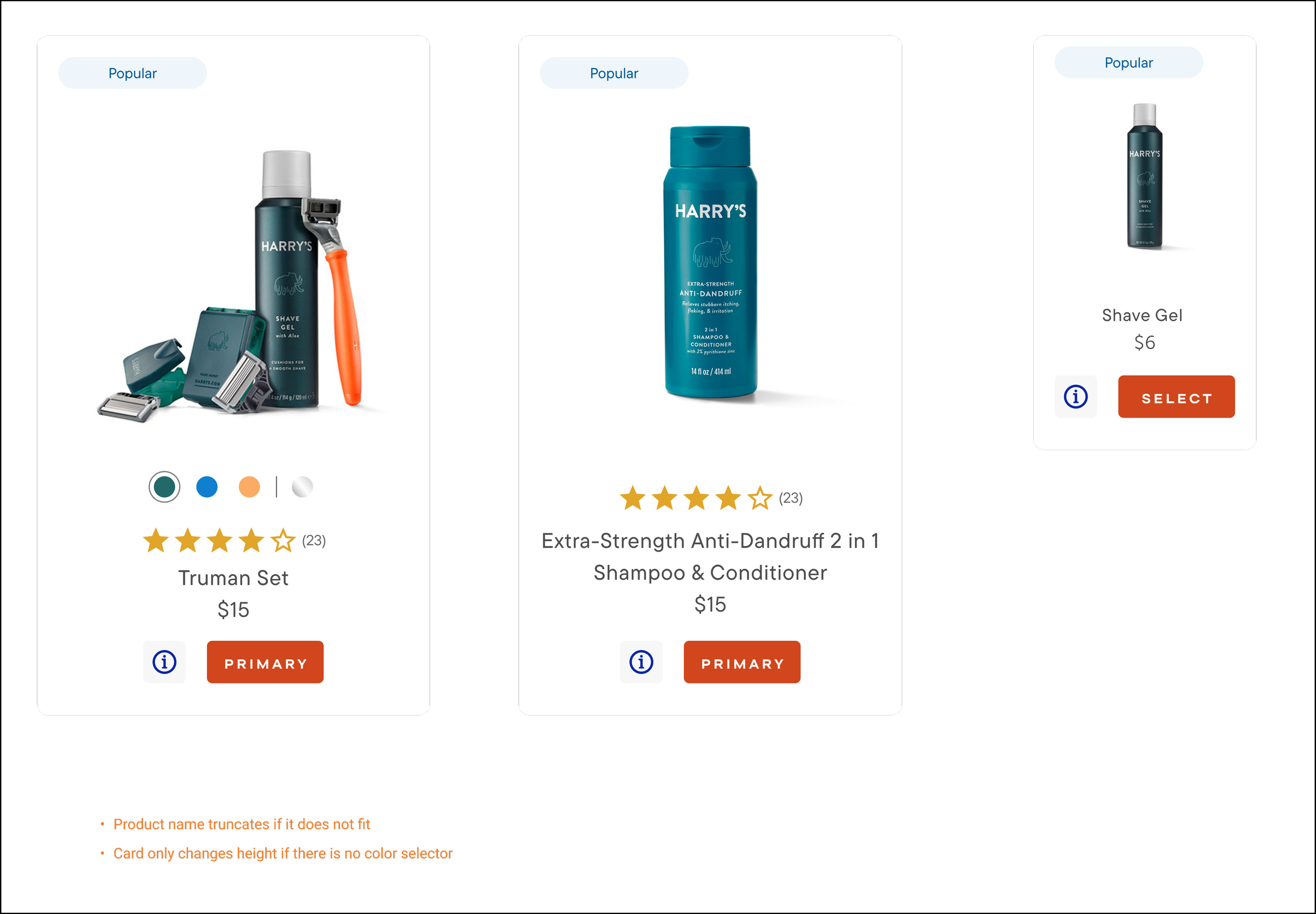
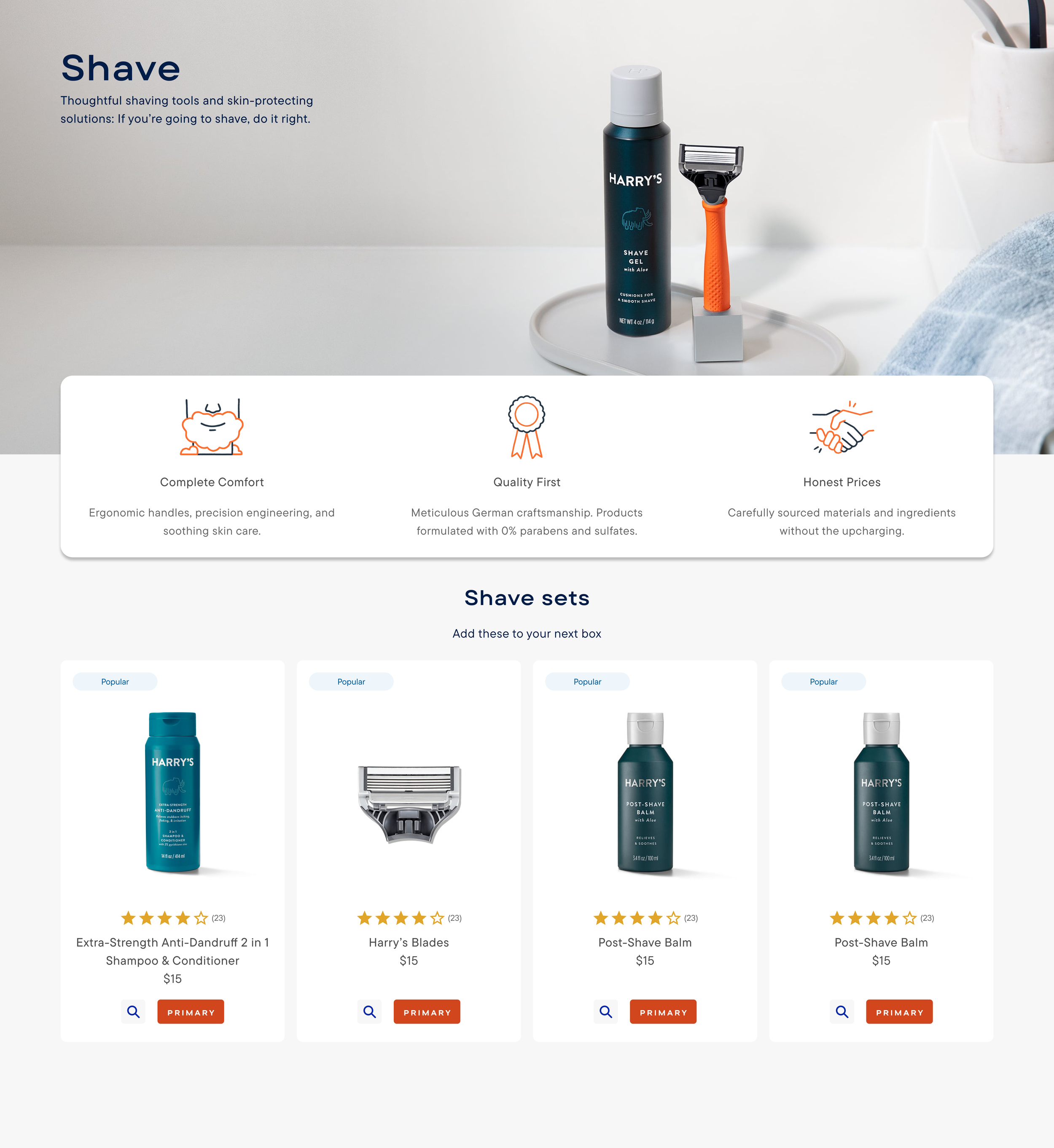
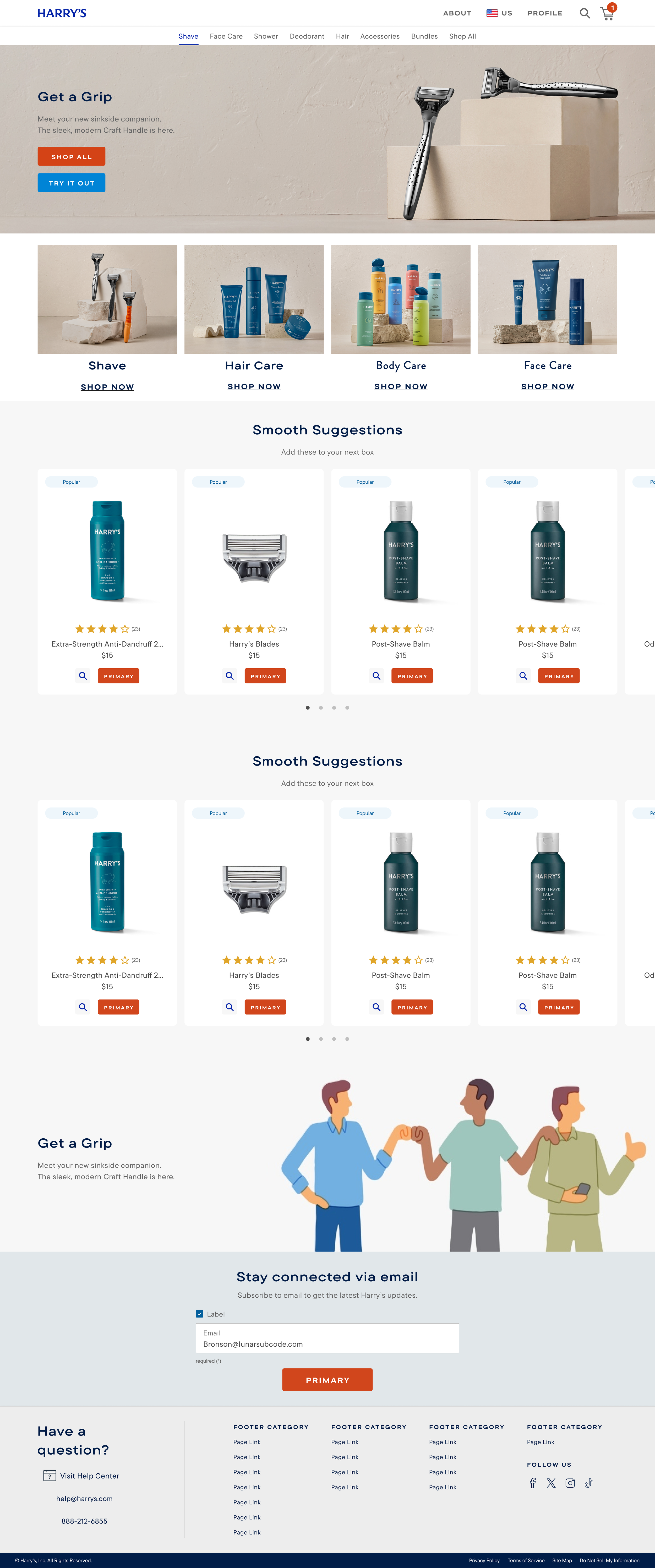
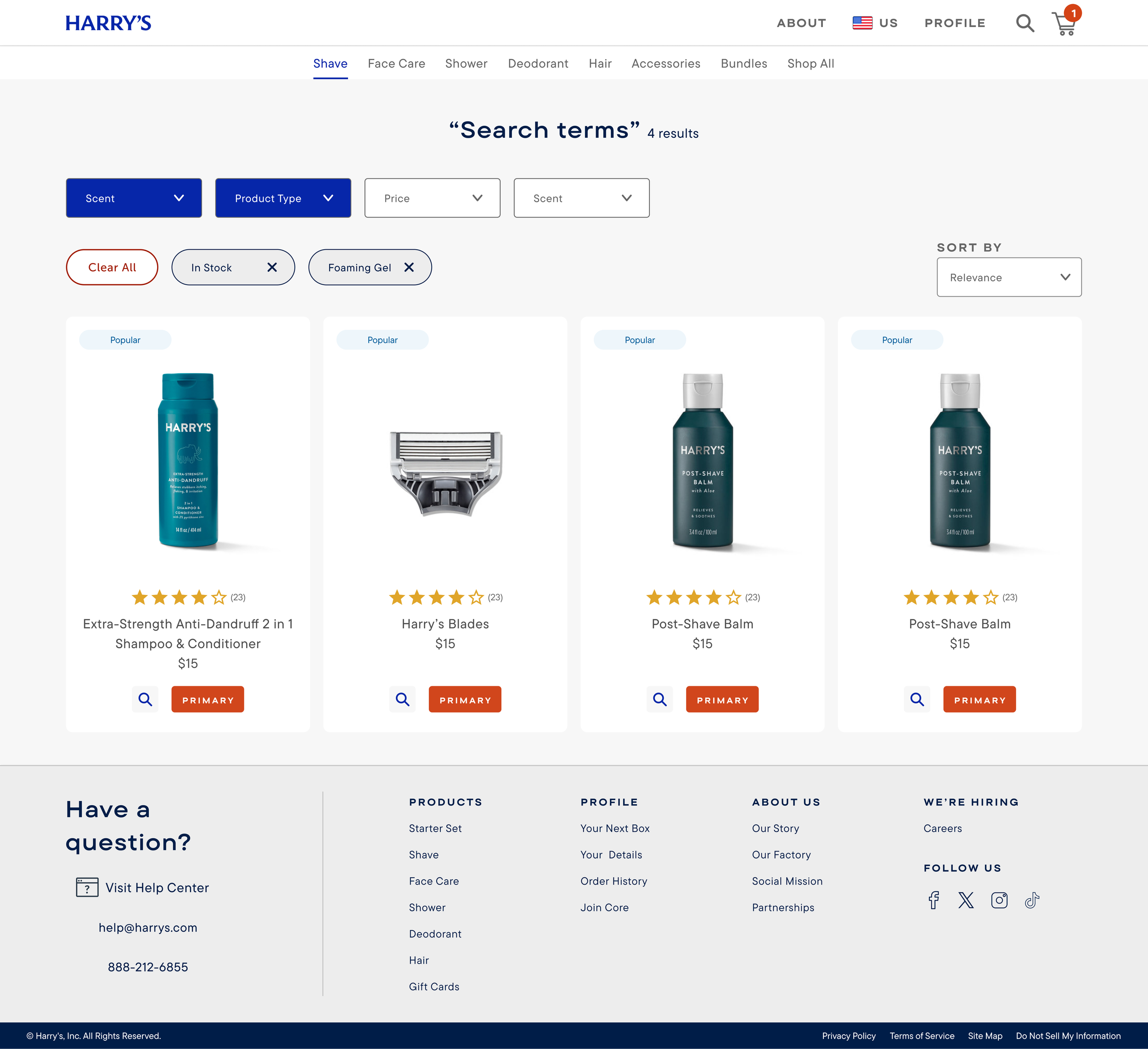
Modular Architecture
Reusable components allowed teams to assemble product surfaces without redesigning each experience from scratch.
System-driven layouts
Consistent structural patterns ensuring clarity, scalability, and predictable engineering implementation.
Experimentation-ready
Modular sections allowed Product and Growth teams to test and iterate without heavy engineering refactors.
A clear hierarchy between foundational primitives and product-level experiences.
Foundational variables governing typography, spacing, and brand colors platform-wide.
Reusable primitives forming the core building blocks of every interface element.
Complex organisms supporting merchandising, discovery, and lifecycle interactions.
Standardized patterns and grid systems enabling consistent page construction.
The final assembly of surfaces into distinct journeys (Homepage, PDP, Cart, Account).
Platform Stabilization: Establishing a foundation engineering could trust.
Component Reconstruction
Legacy UI patterns were rebuilt into reusable Forge components and deployed across production commerce flows.
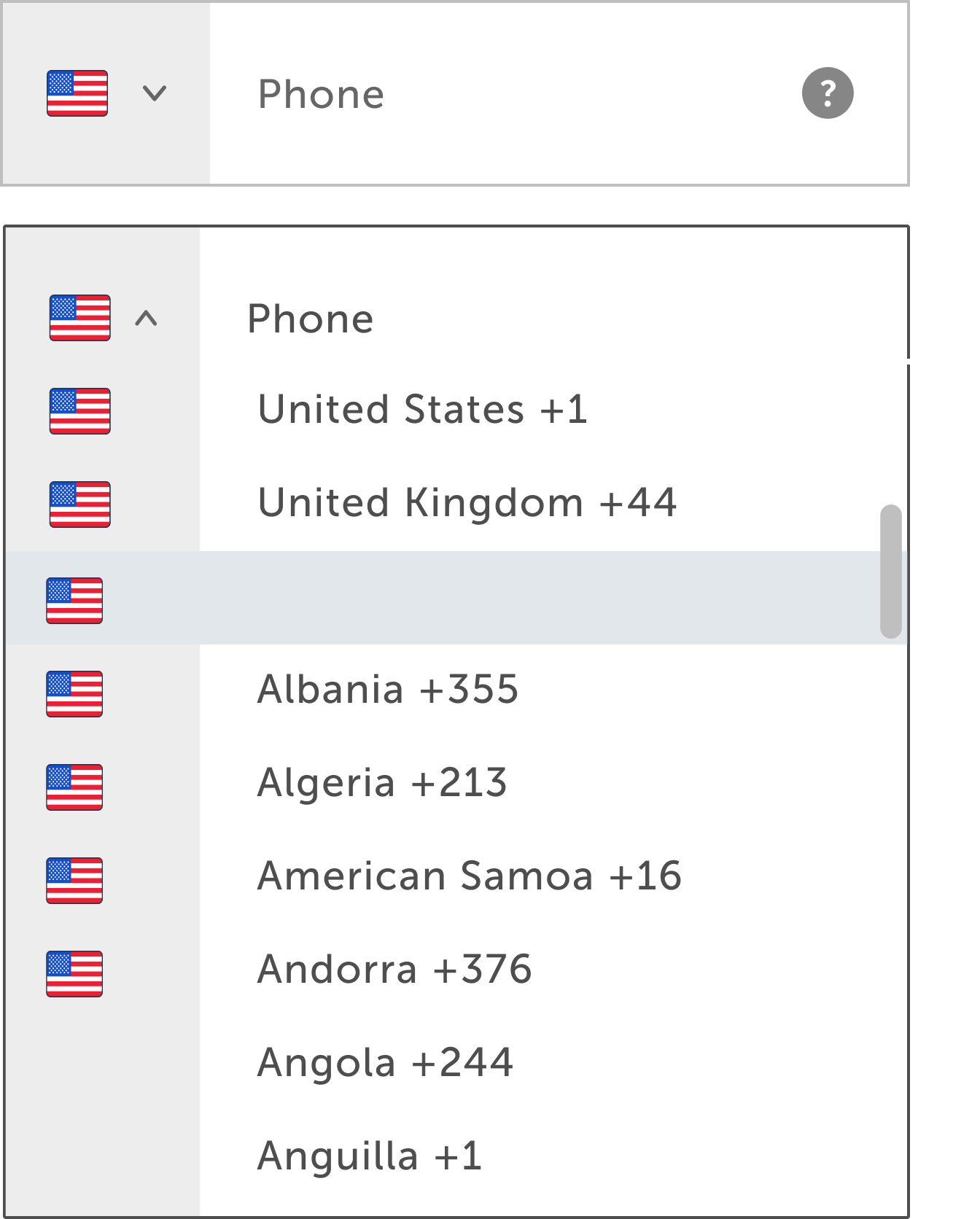
Inconsistent legacy implementation with limited reuse and unclear state behavior.
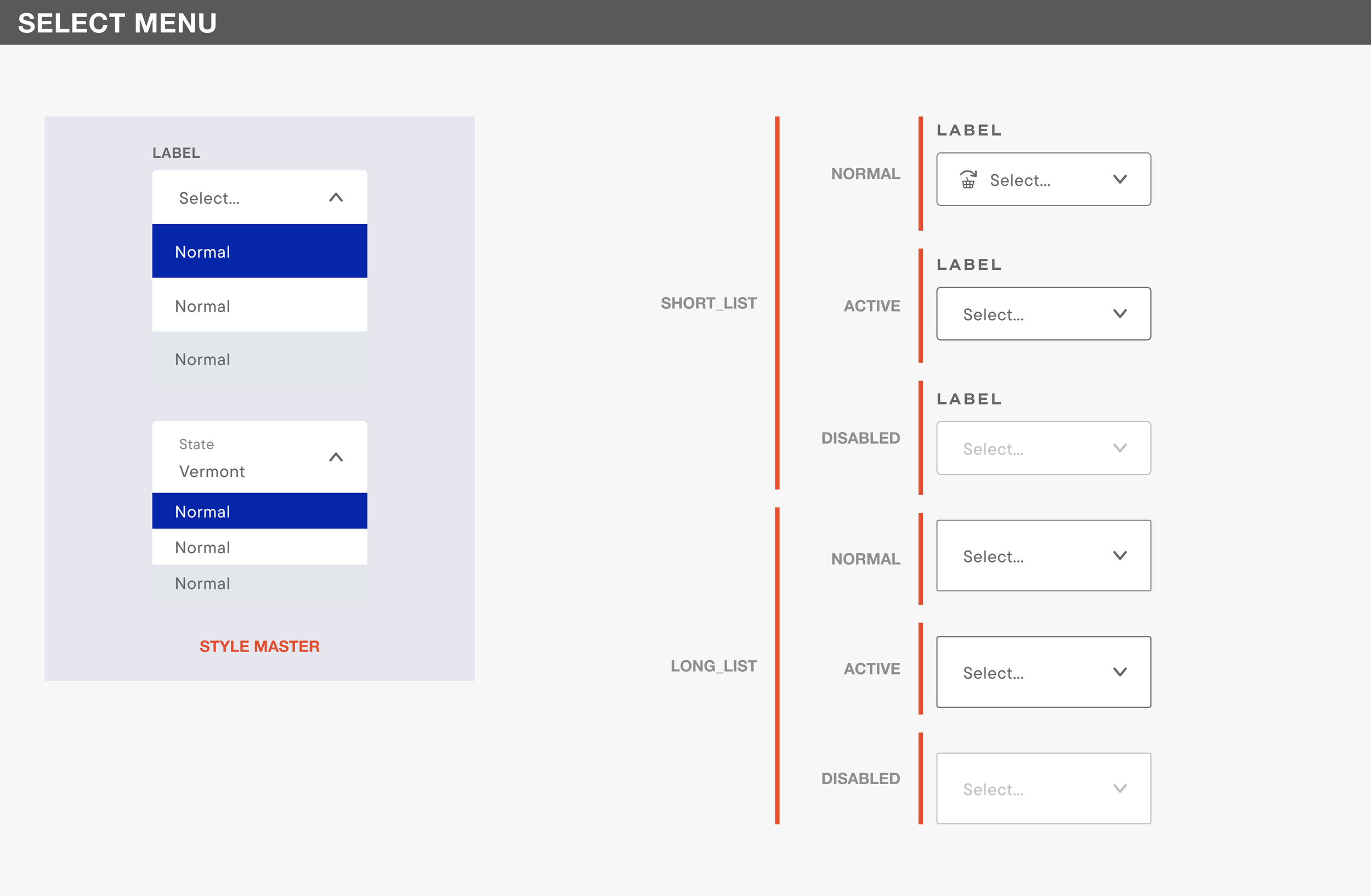
Rebuilt as a reusable, token-based component aligned with Shopify constraints and Forge system standards.
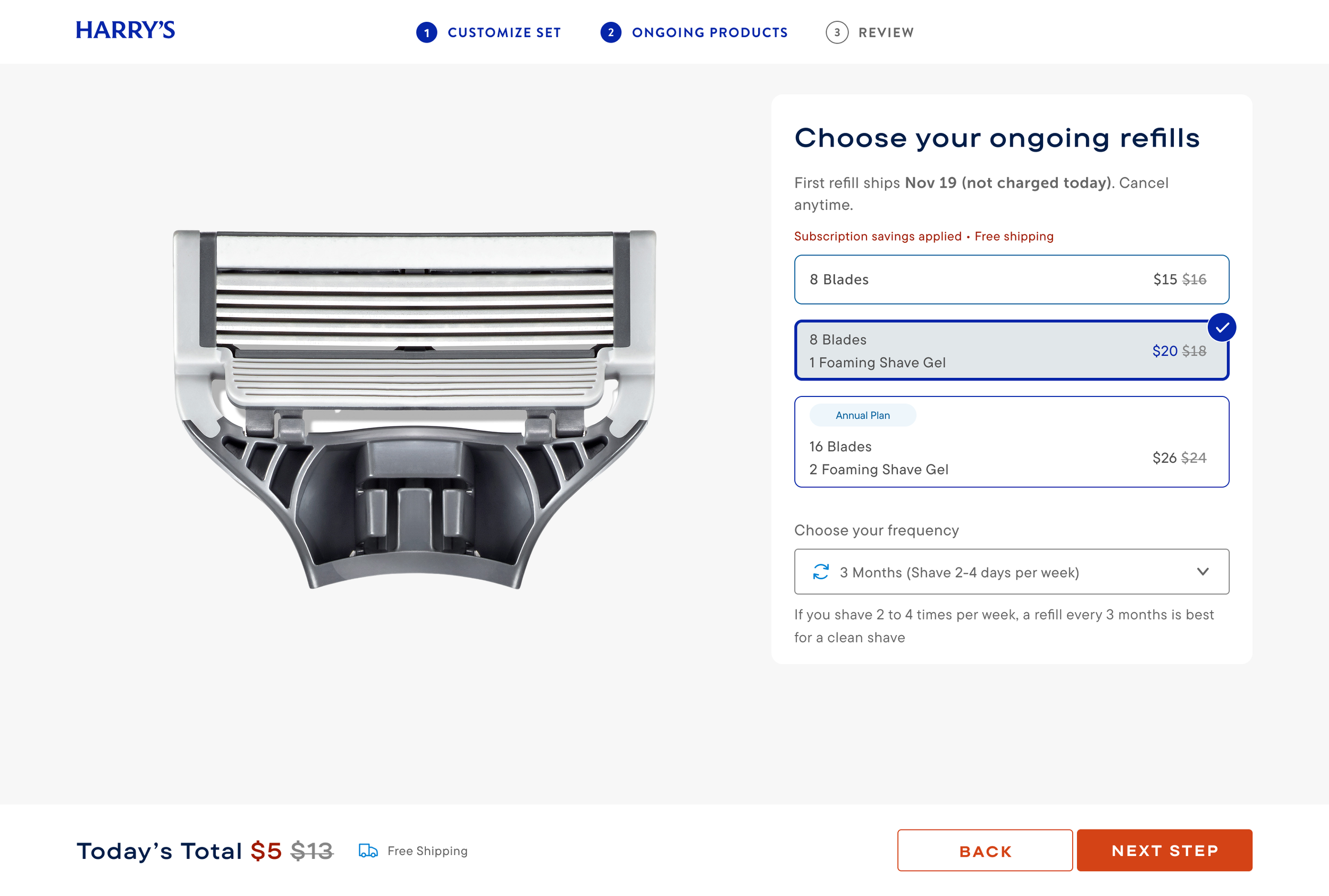
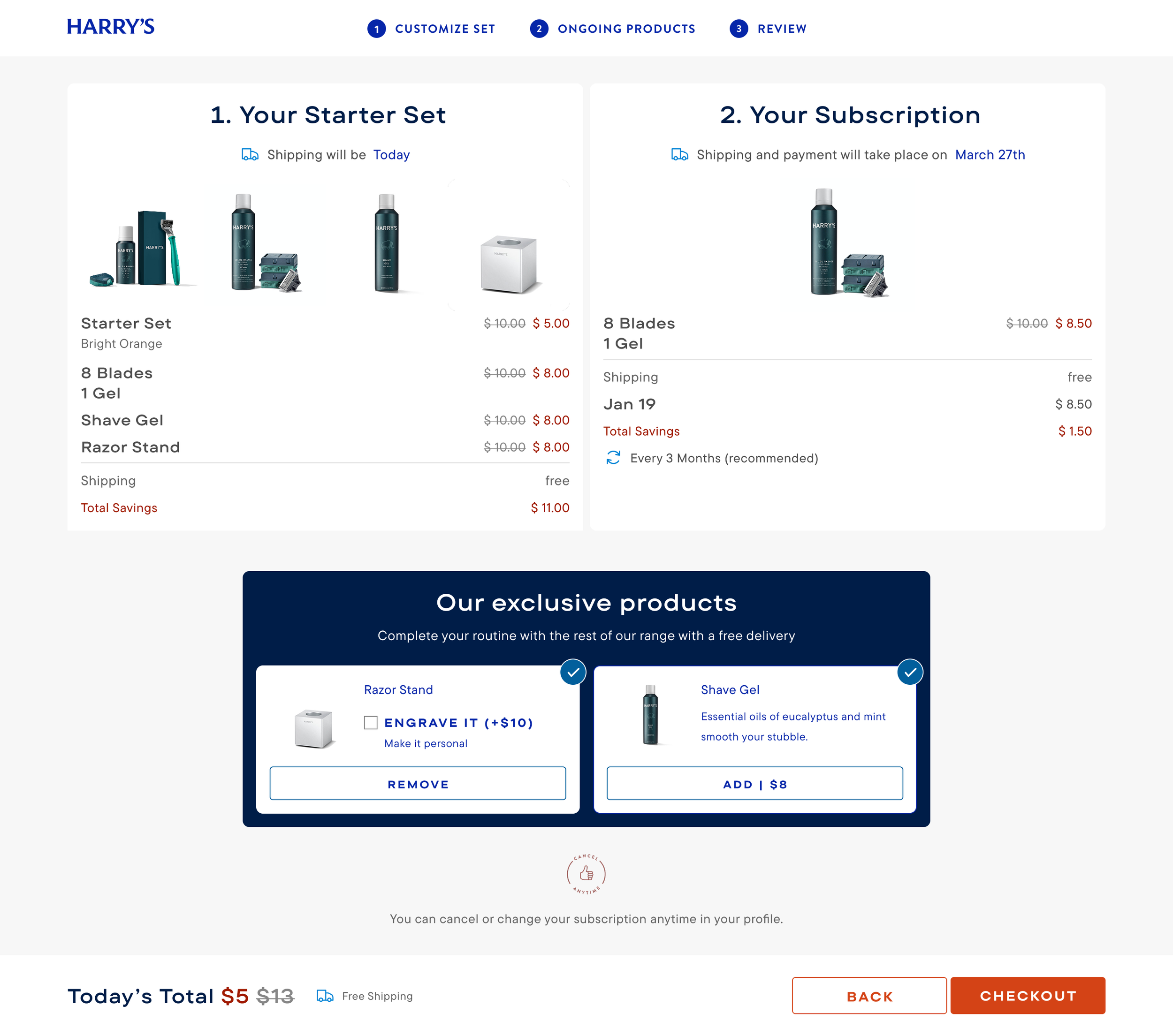
Deployed inside the live trial flow as part of a scalable responsive purchase architecture.
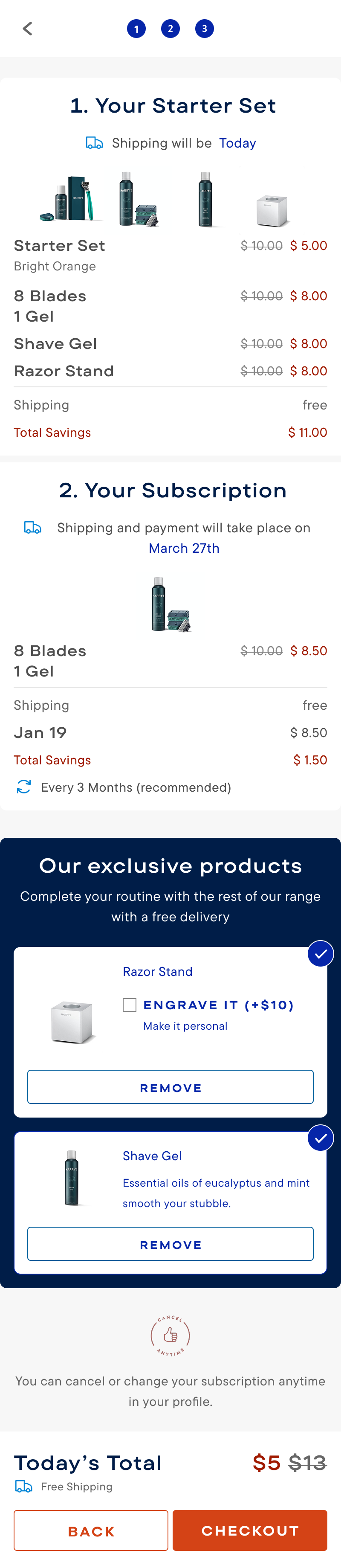
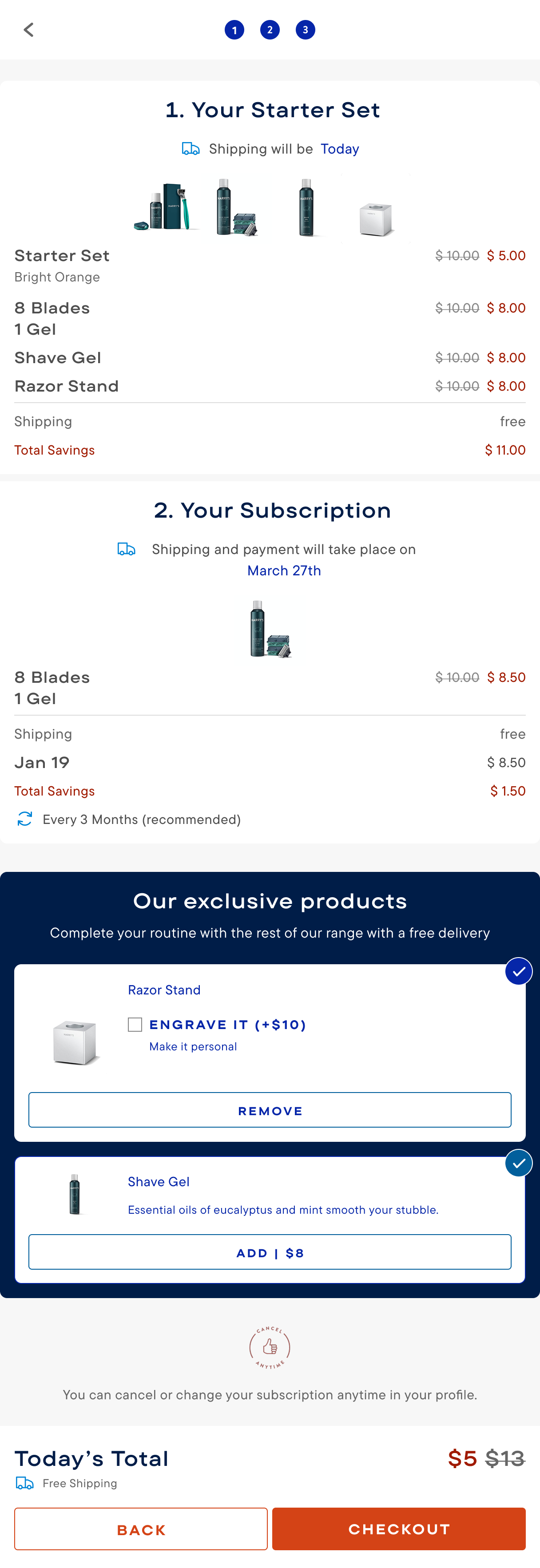
Responsive Trial Flow Implementation
A cross-breakpoint validation of the 3-step conversion funnel. Click to inspect.





From system rebuild to platform standard.
Forge became the default operating model for how teams built and shipped key surfaces across Harry’s and Flamingo through a shared system foundation.
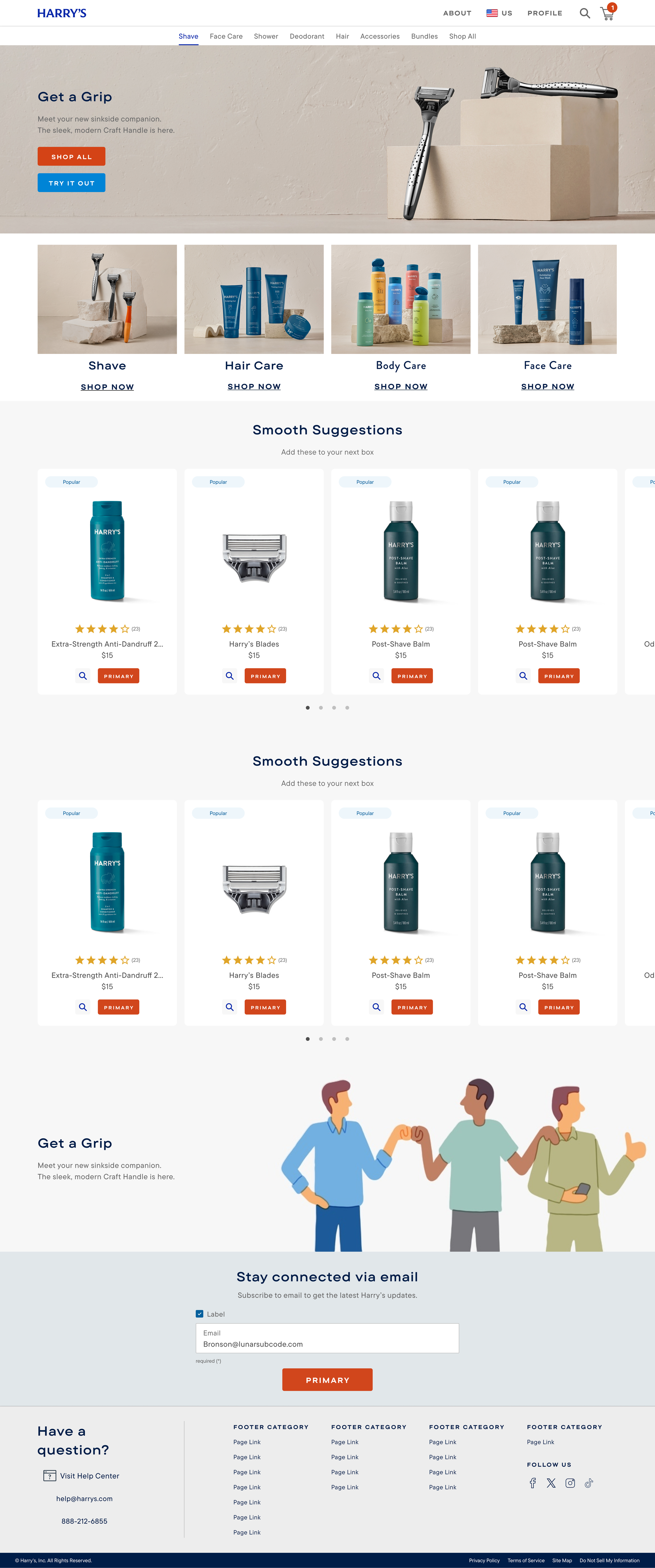
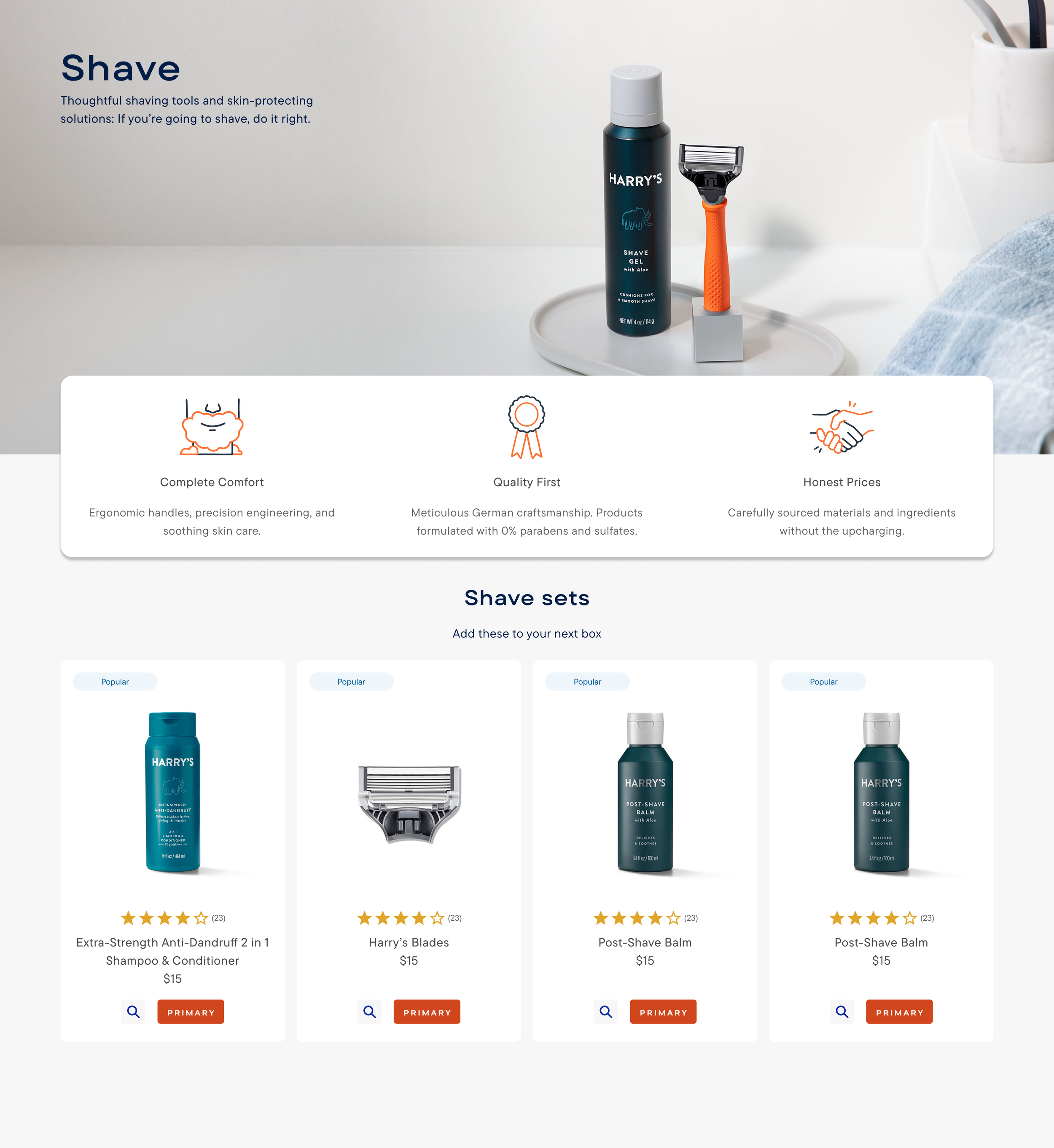
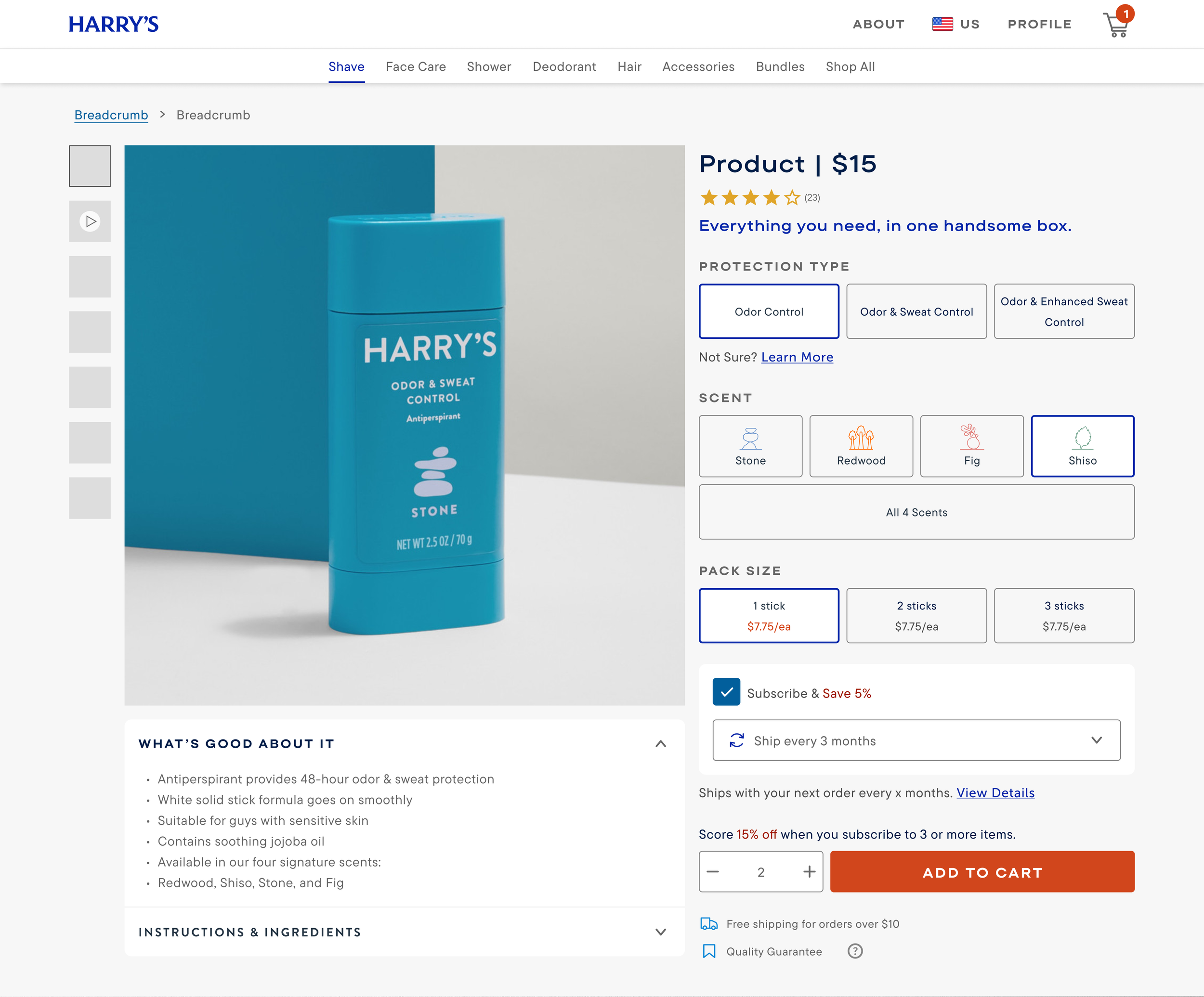
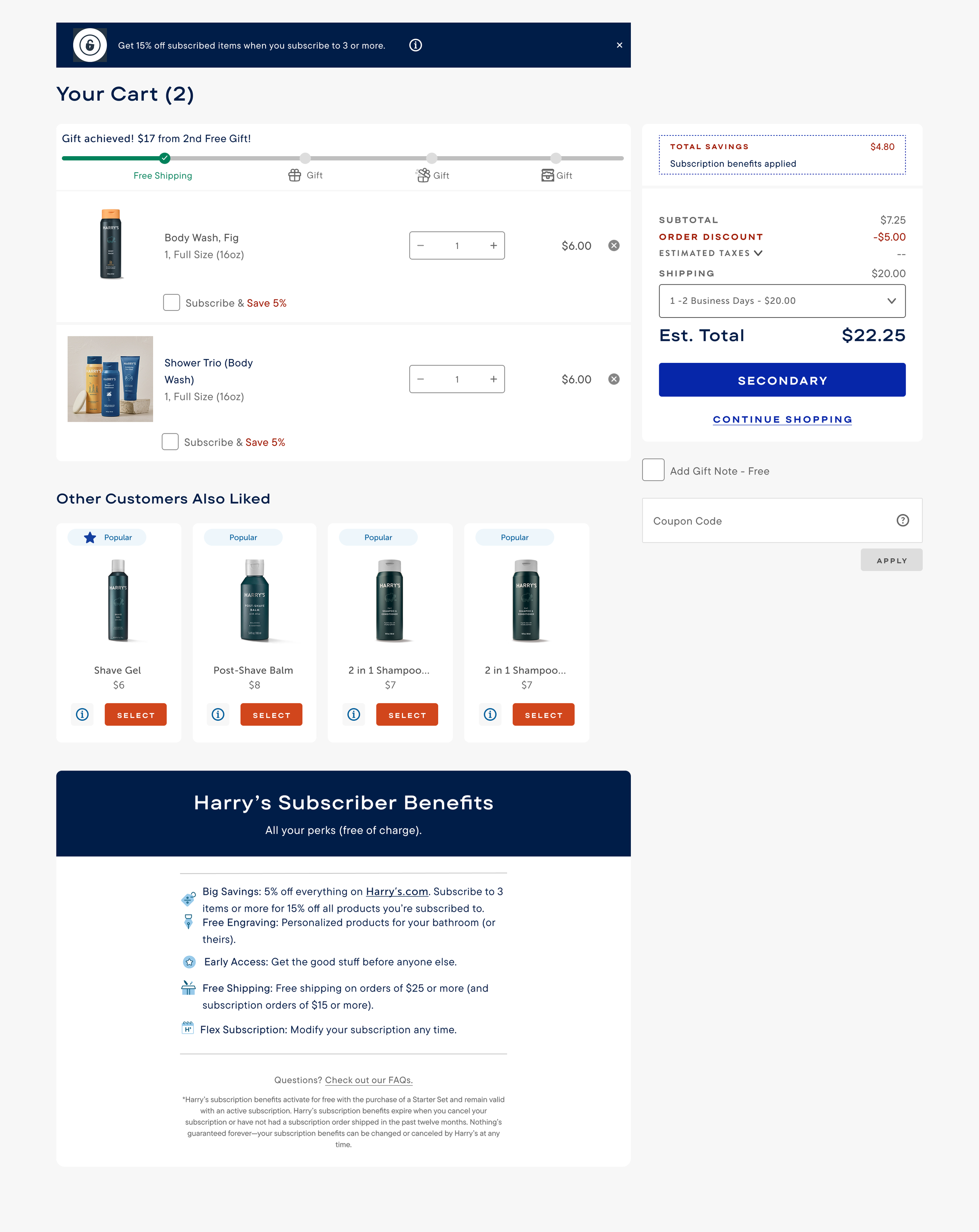
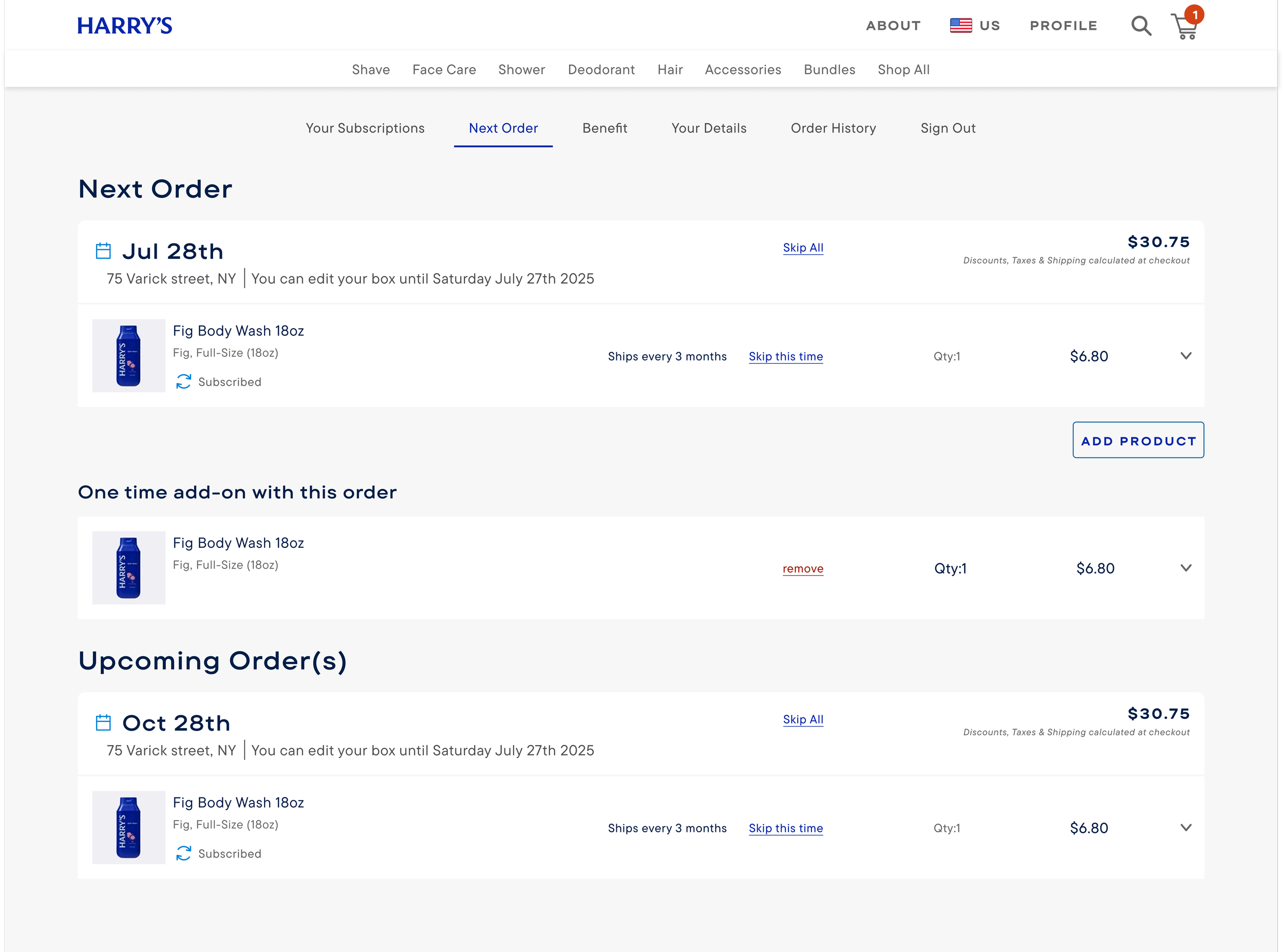
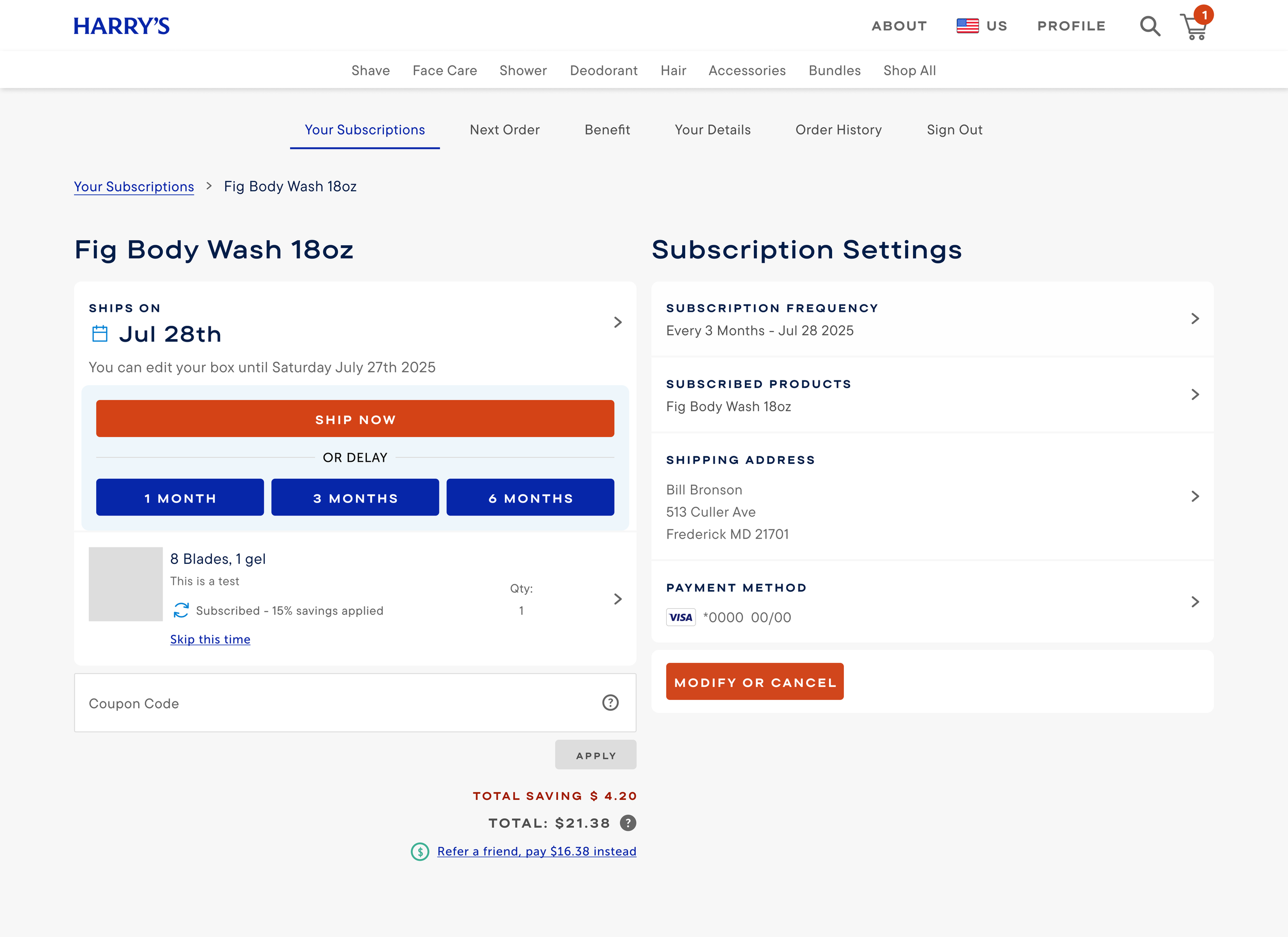
A unified interface language applied across the end-to-end commerce funnel. Click to enlarge screens.
Modular merchandising and campaign surfaces.
Collection, filtering, and browse patterns.
PDP enhancements and conversion-focused modules.
Capture surfaces and experimentation patterns.
Operational outcomes and platform leverage.
Forge enabled high delivery velocity by providing a standardized library, supporting the shipment of 80+ features within a single year.
Standardizing layouts reduced UI fragmentation across Harry’s and Flamingo DTC storefronts, creating a unified brand experience.
Powered key experiences that contributed to measurable gains in conversion and retention across the commerce funnel.